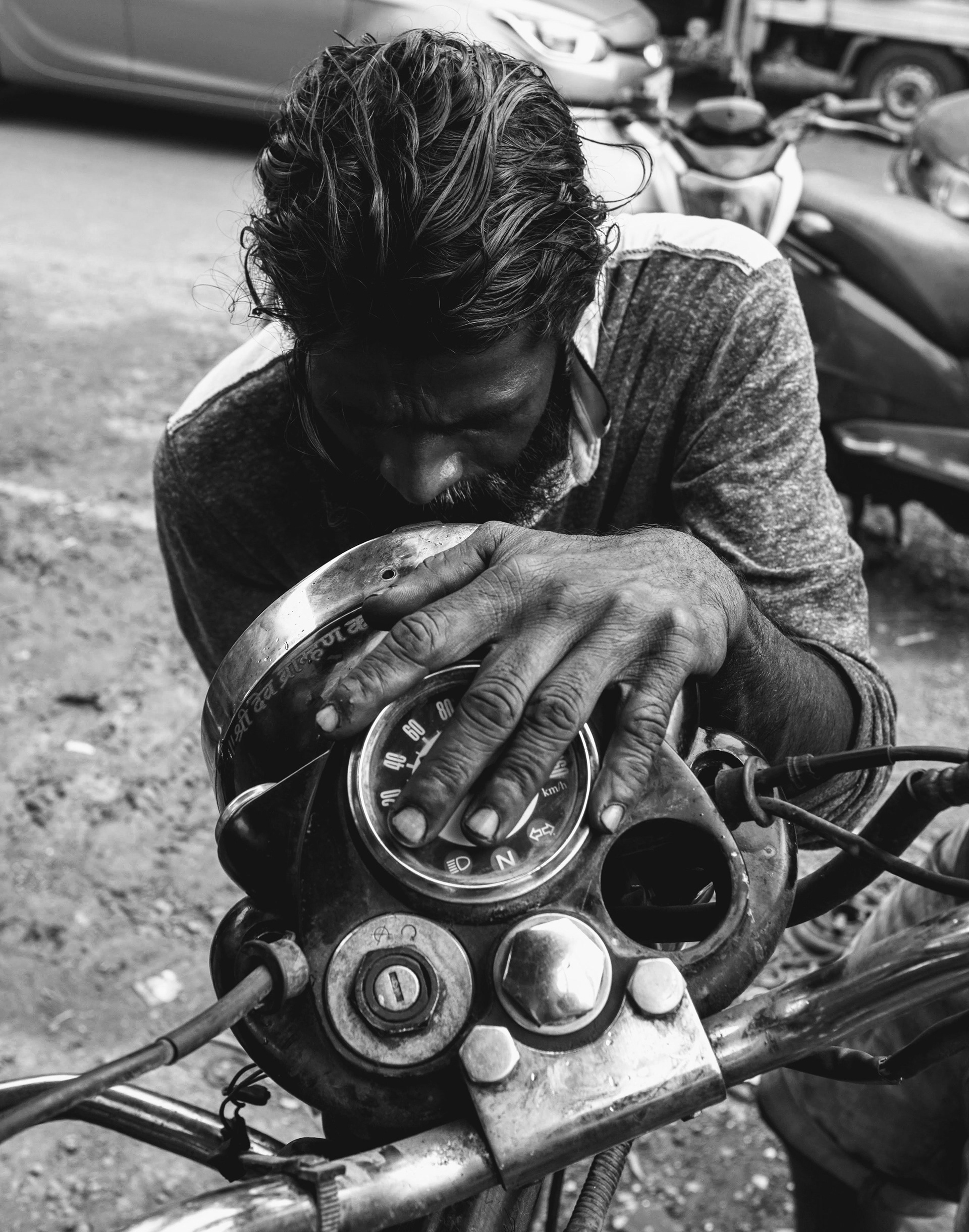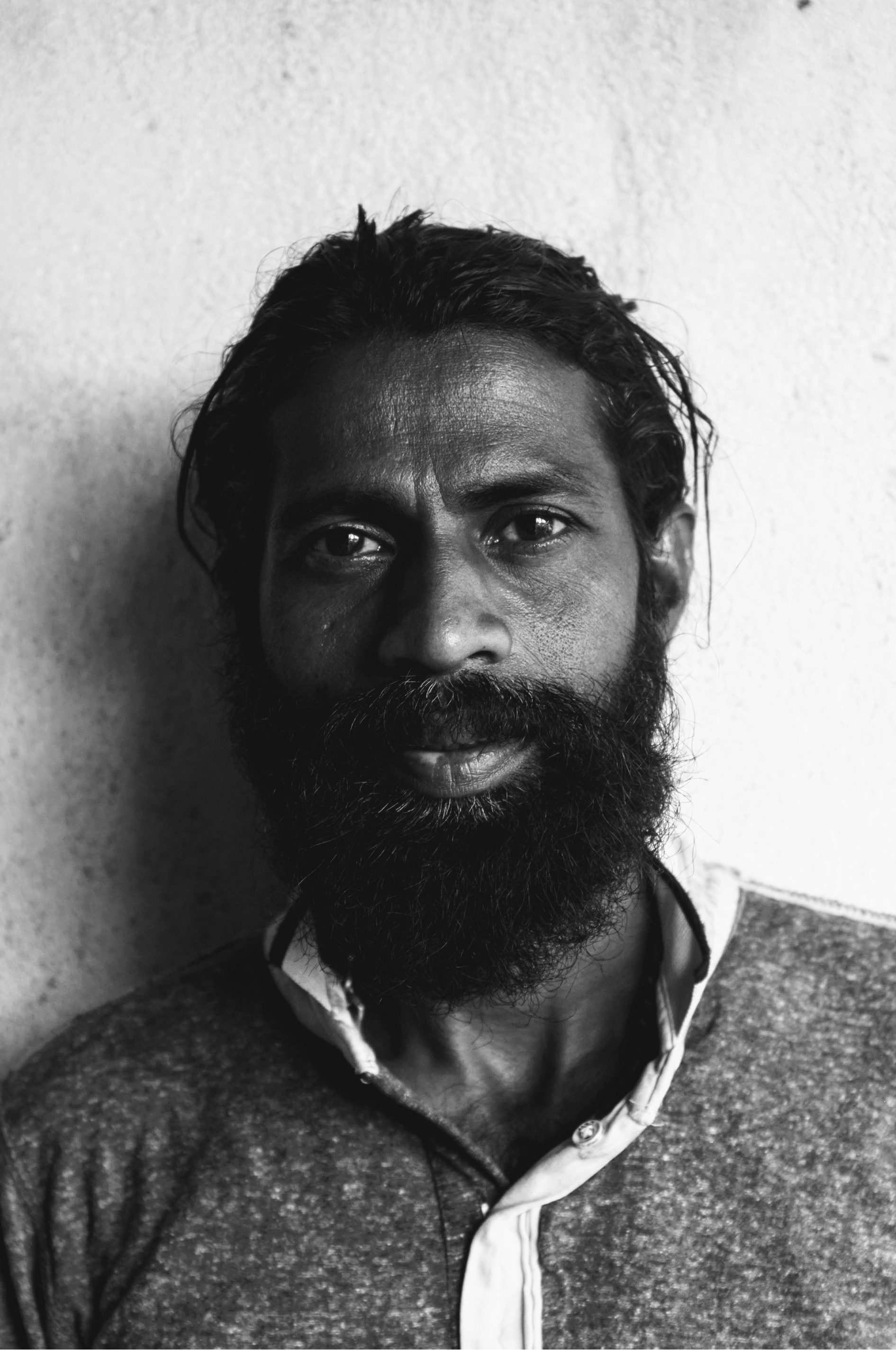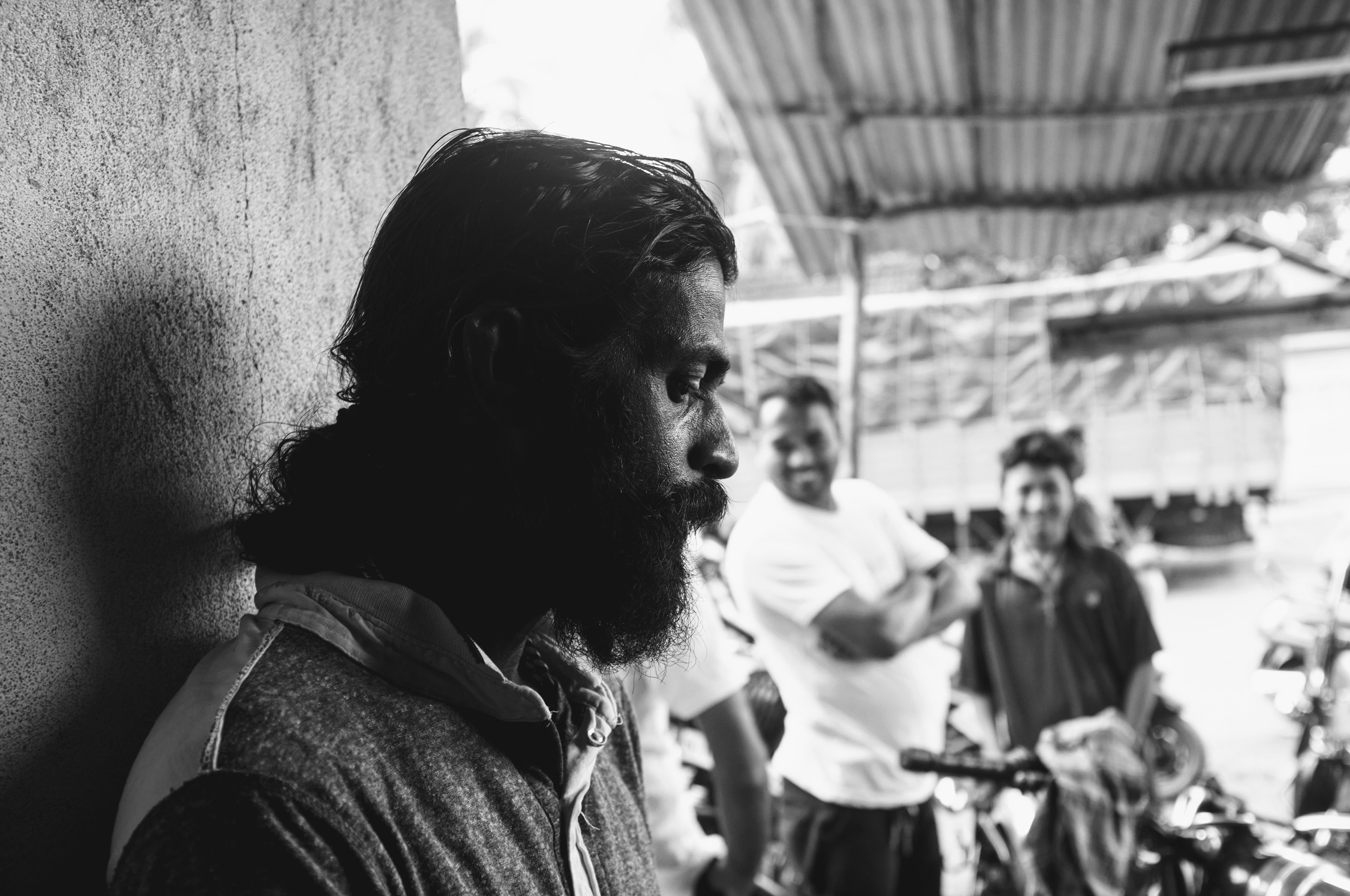
On the night before I met Raj Shridhar, a cyclone was blowing fierce winds onto the sunbaked beaches of Arambol in North Goa. They roared across the Arabian Sea and knocked the power out in the middle of the sticky and starless night. In the distance you could hear the sounds of long stroke single engines thumping through the dark storm. It was this inimitable sound that originally drew Raj to the motorcycle that heavily populates the subcontinent.
"I first heard that sound when I was just 5 years old," Raj reflects. "That 'puttah-puttah-puttah'... I love that sound. My mother and I used to make the noise together—we'd 'puttah-puttah' and laugh as they rode by our house."
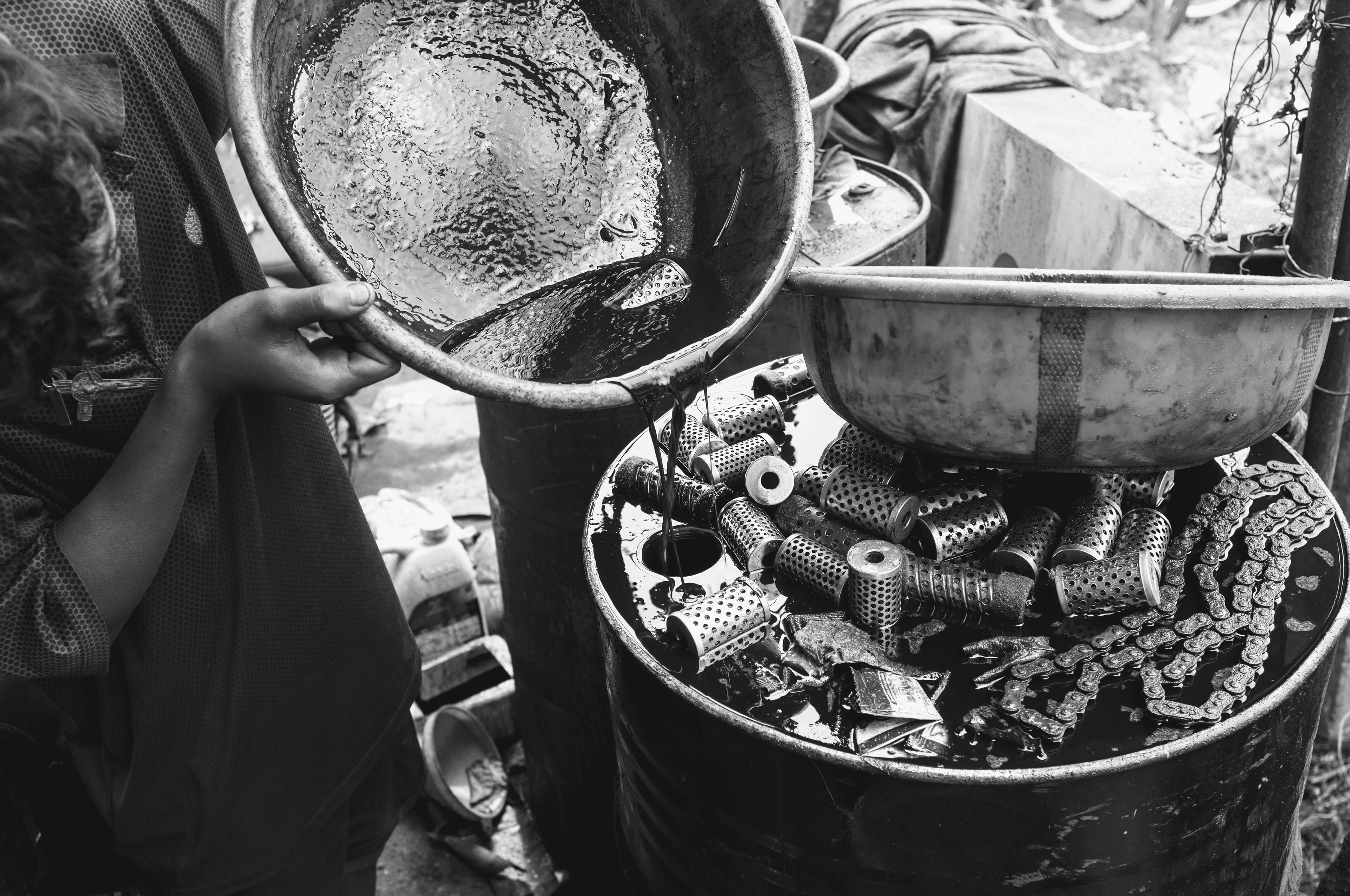
The Enfield Republic
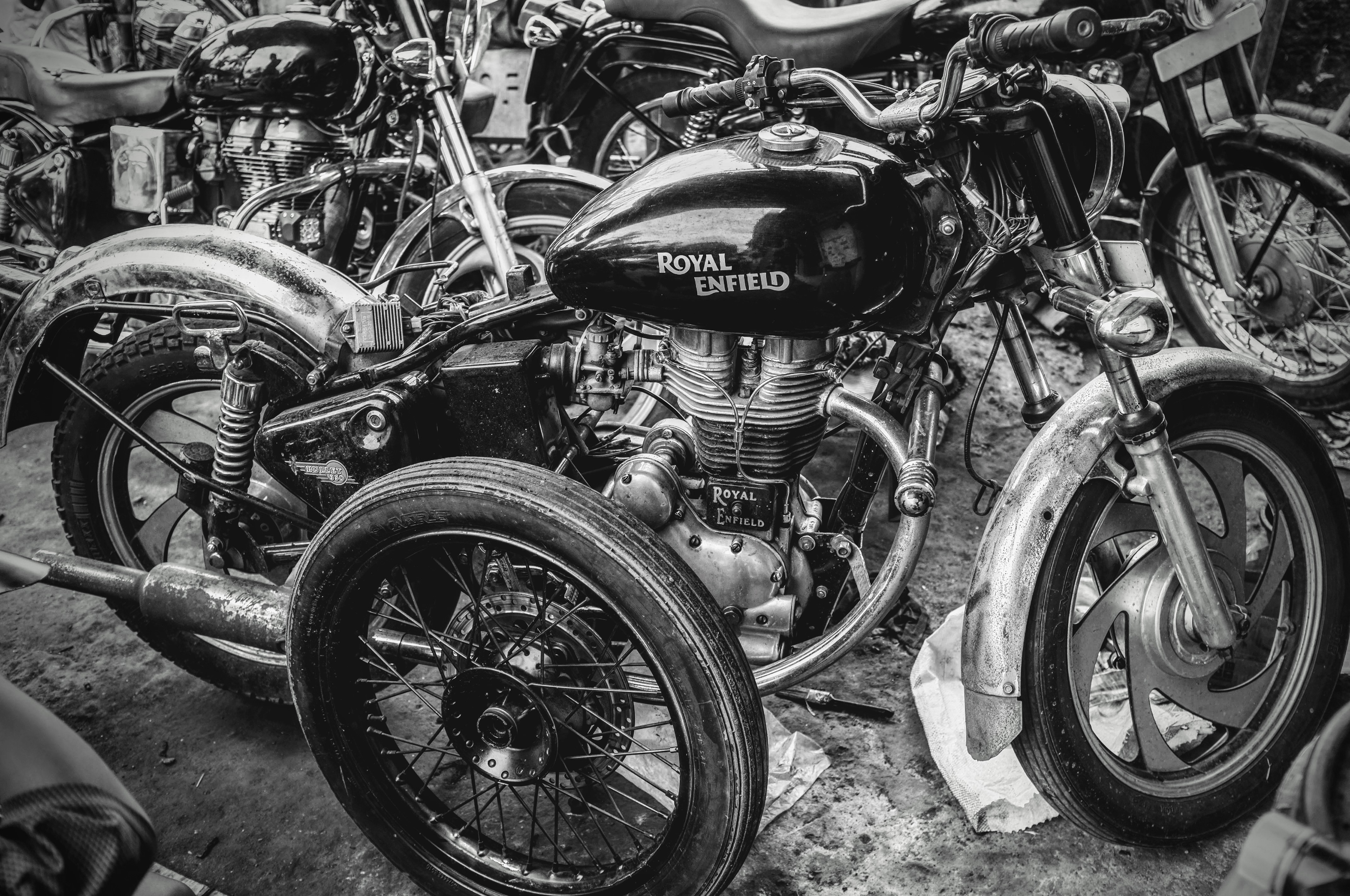
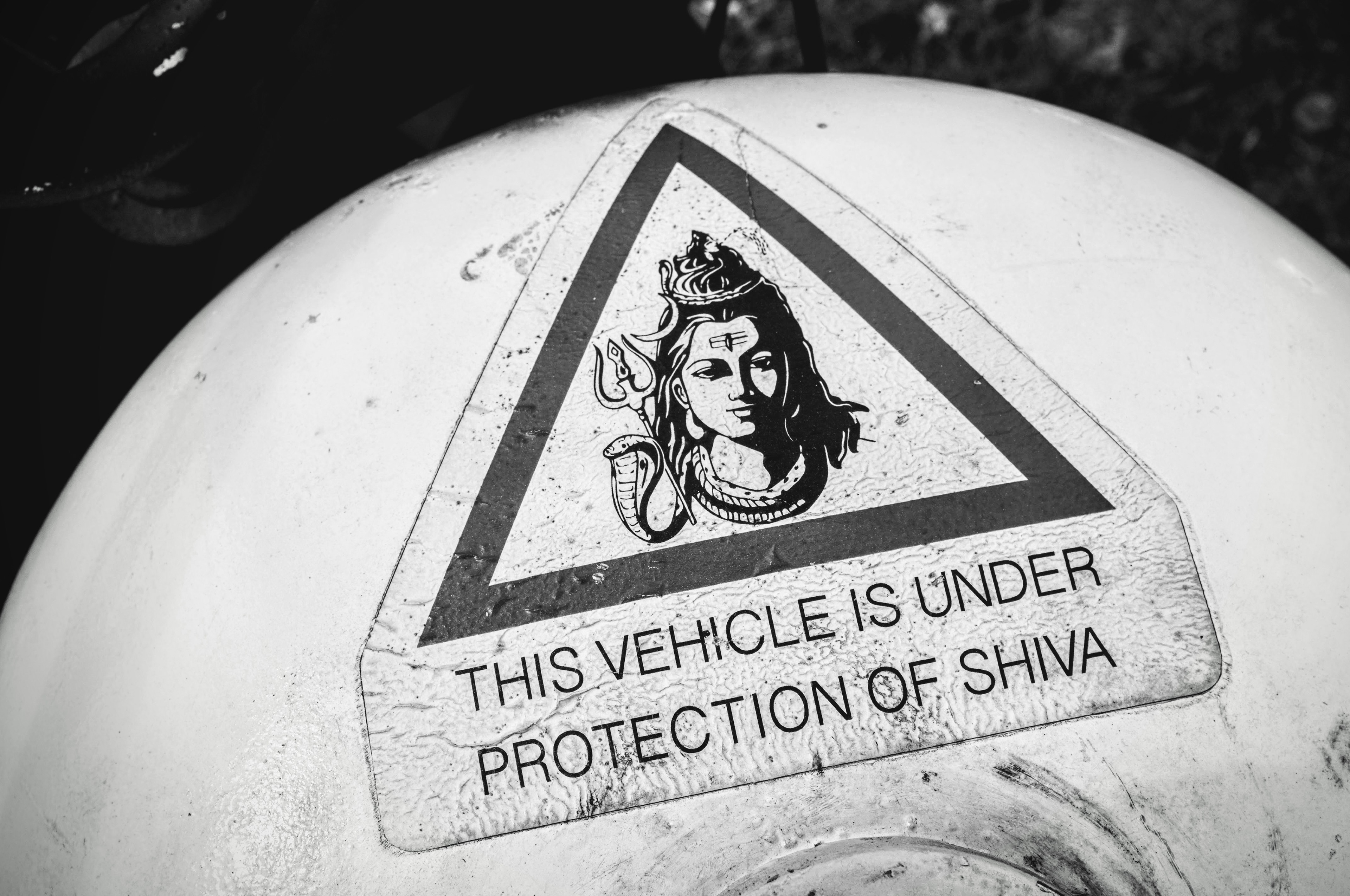
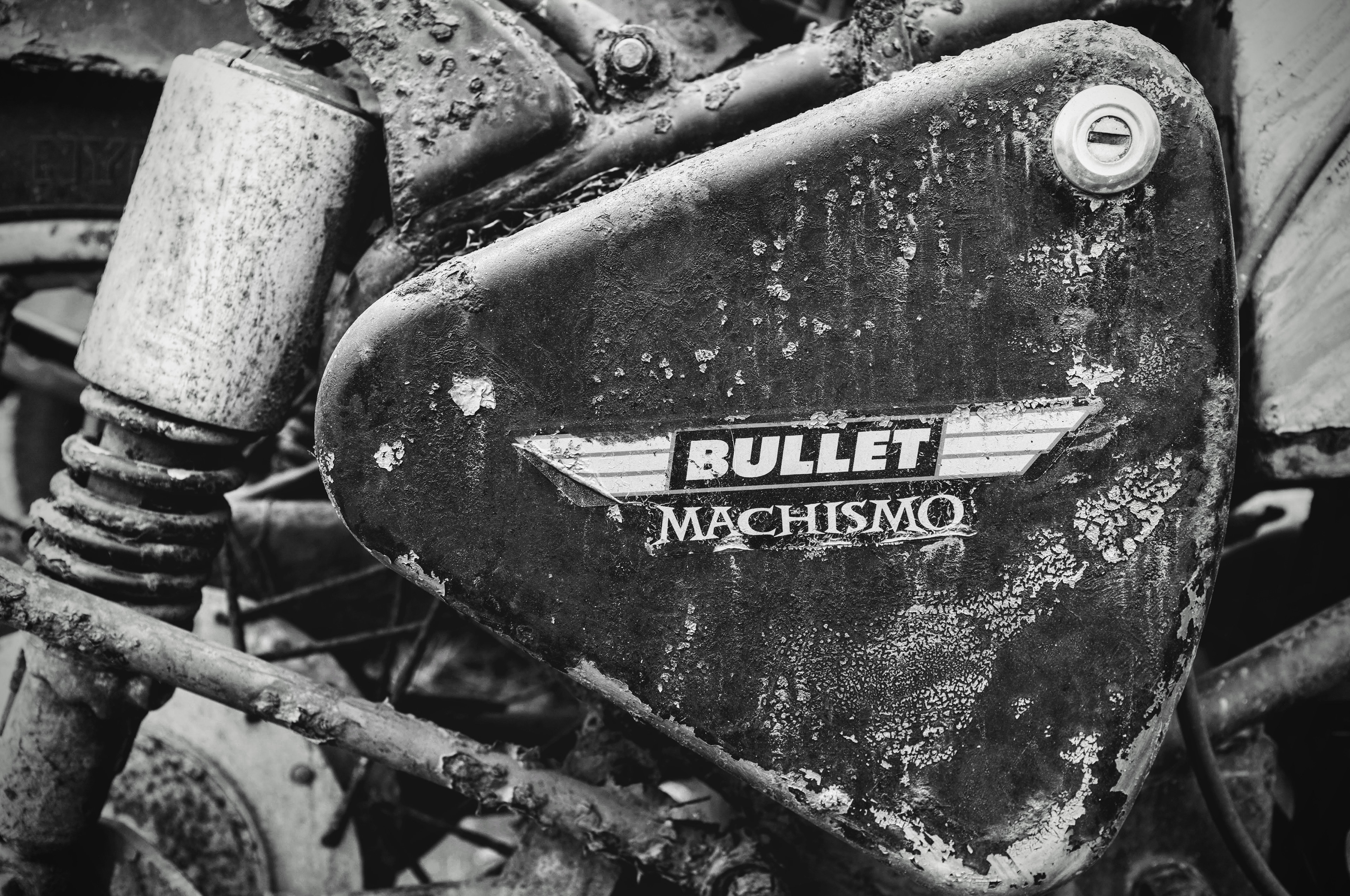
The Royal Enfield occupies a peculiar place in India's mechanical consciousness. These bikes aren't simply motorcycles—they're cultural artifacts, the soundtrack to countless Bollywood chase scenes and real adventures across the subcontinent. When the British factory closed in 1970, production continued in Chennai, and the bike evolved into something distinctly Indian. Unlike slick, computerized motorcycles from Japan and Europe, the Enfield remained stubbornly analog—air-cooled, simple, fixable with basic tools on any highway between Kerala and Kashmir.
This simplicity is both blessing and curse. Enfields break down. They leak oil. They require constant attention. But this has created an entire ecosystem of mechanics and devotees across India. Goa, with its blend of beach culture and international tourism, has become a particular hub. Rental shops line the coastal roads. Custom shops have proliferated, each with its own interpretation of what an Enfield can become. Raj's shop sits in the middle of this spectrum—functional first, beautiful second, but with an appreciation for the machine's essential character.
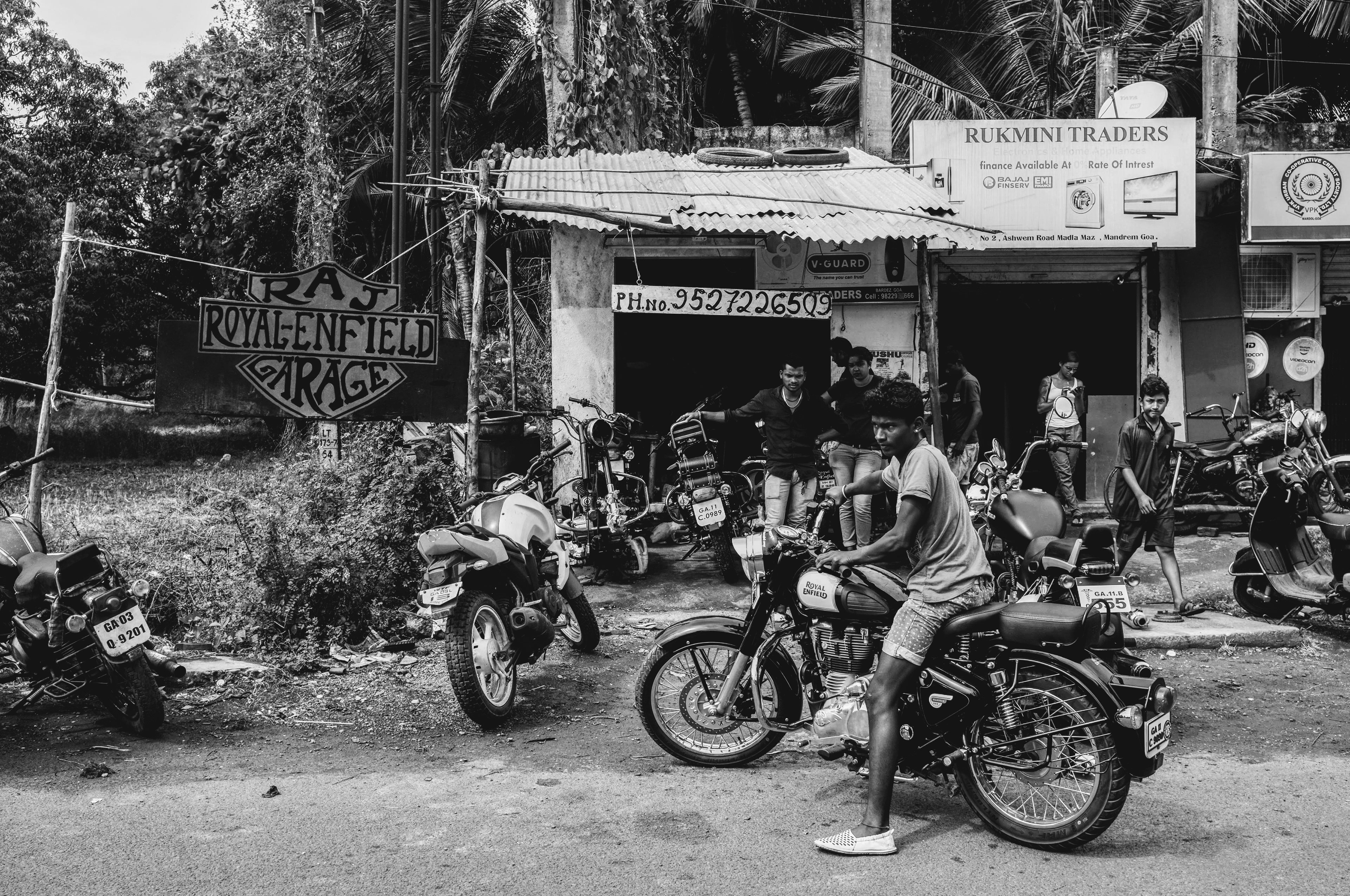
The Workshop
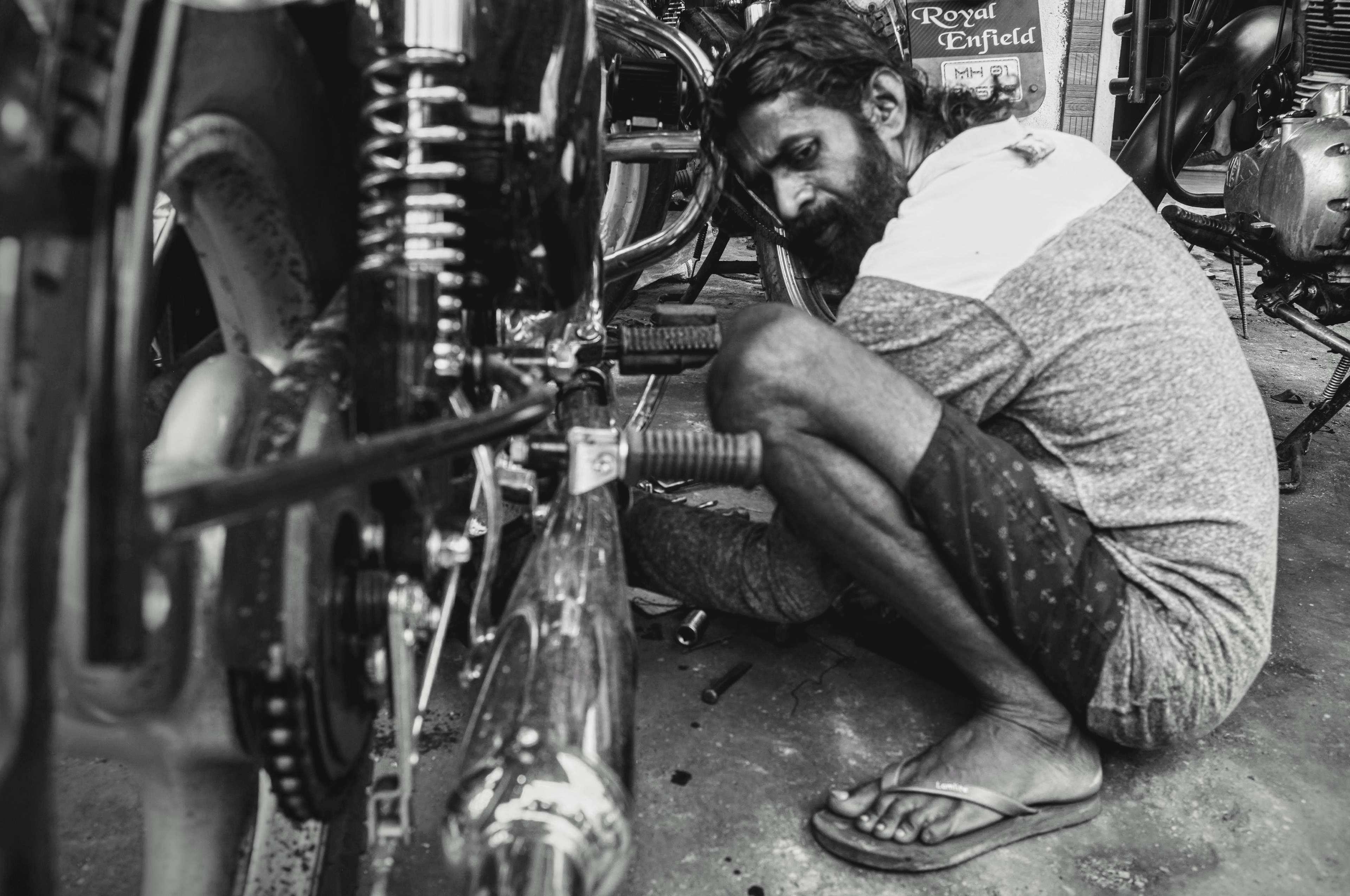
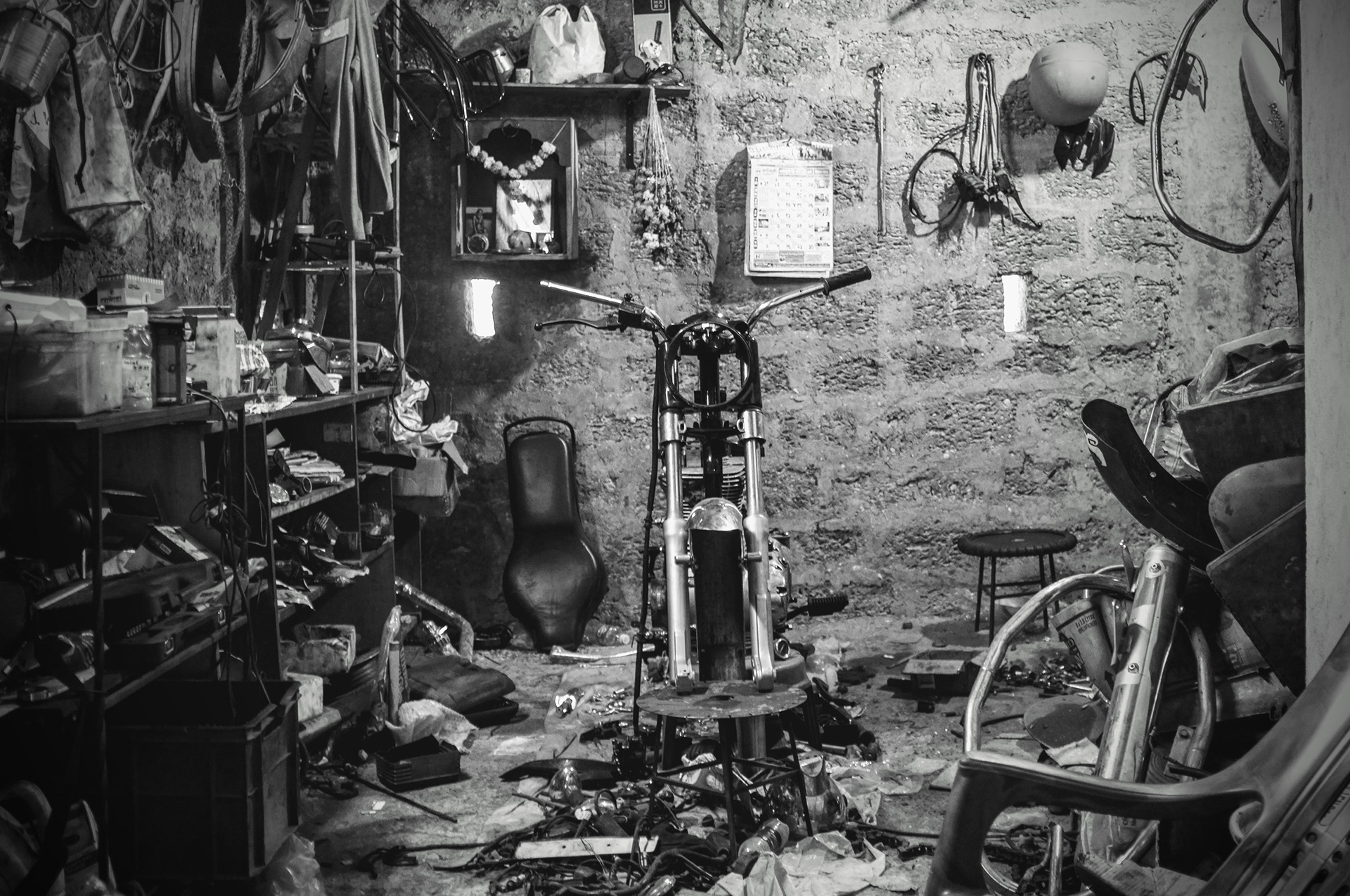
The garage announces itself before you see it. Metallic percussion of hammer on steel, the whine of a drill bit, the particular cough of an engine being coaxed back to life. Then the smell—motor oil, metal shavings, gasoline, and the sweet decay of tropical vegetation pressing in from all sides. The ceiling is low, stained with decades of grease and smoke. Fluorescent tubes cast harsh light across workbenches cluttered with tools—socket wrenches still warm from the last job, screwdrivers arranged by size, hammers with handles worn smooth. Bikes in various states of assembly occupy every space. Some are up on stands, engines exposed. Others lean against walls, waiting. Parts hang from the ceiling— exhaust pipes, fenders, handlebars—creating a canopy of chrome and steel.
In one corner, a black skeleton of a bike sits suspended on stools. The frame stripped, sandblasted, waiting for Raj's vision. Nearby, a parts bin overflows with carburetors, gears, chains—the raw material of transformation.
The sounds layer constantly. The pneumatic hiss of an air compressor. The rhythmic tink-tink-tink of someone truing a wheel. The sudden roar of an engine firing up, followed by Raj's critical ear listening for problems. Radio plays in the background—sometimes Bollywood, sometimes American rock, sometimes local news in Konkani washing over the mechanical symphony.
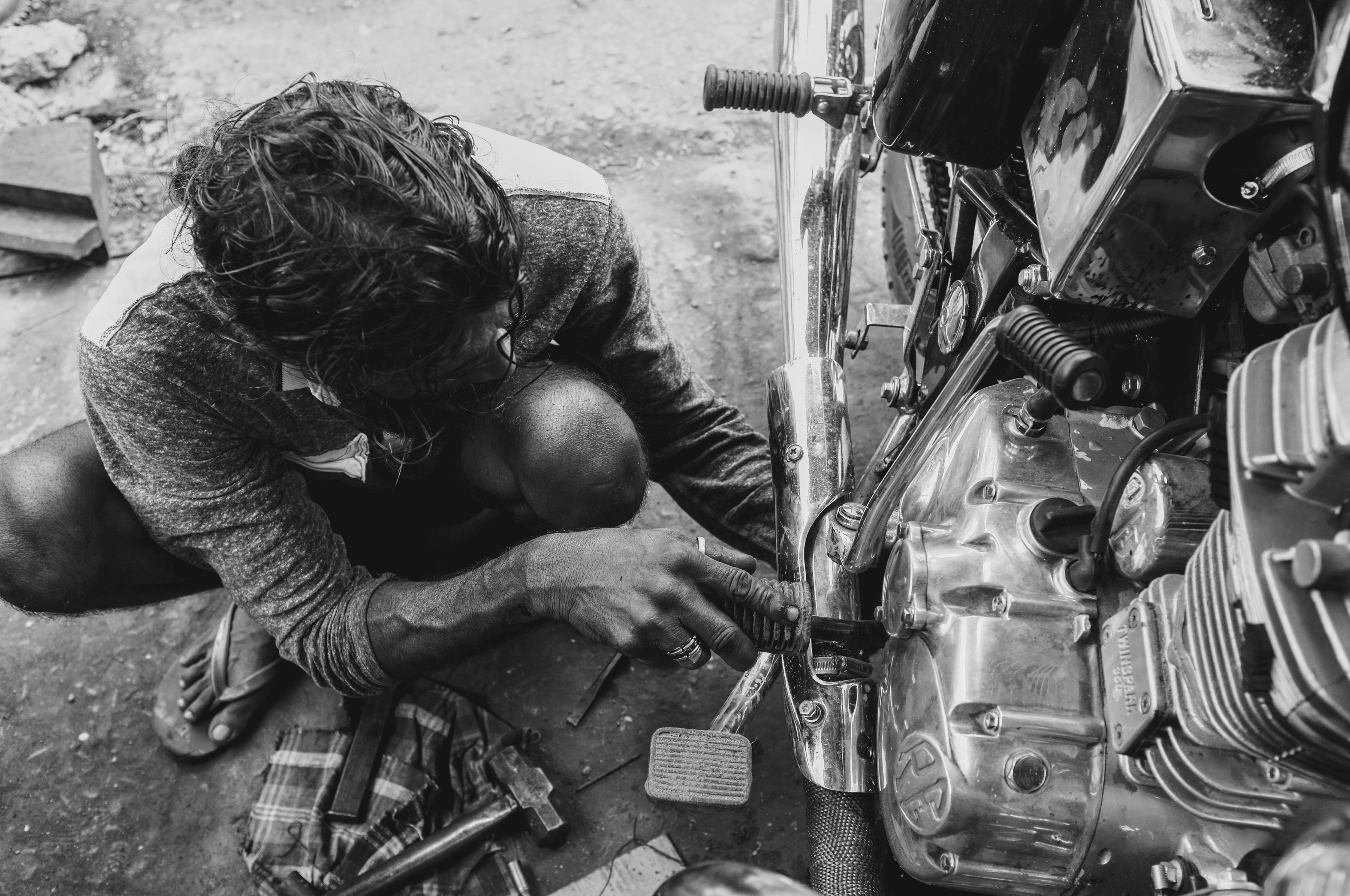
The heat is oppressive. Even with garage doors open to catch the sea breeze, the air is thick and wet. Sweat mixes with grime until everyone wears the same uniform of gray-brown smudges. But there's order to the chaos. Raj's hands move with the efficiency of repetition—reaching for the right wrench without looking, judging torque by feel, reading problems in sounds that would mean nothing to an untrained ear.
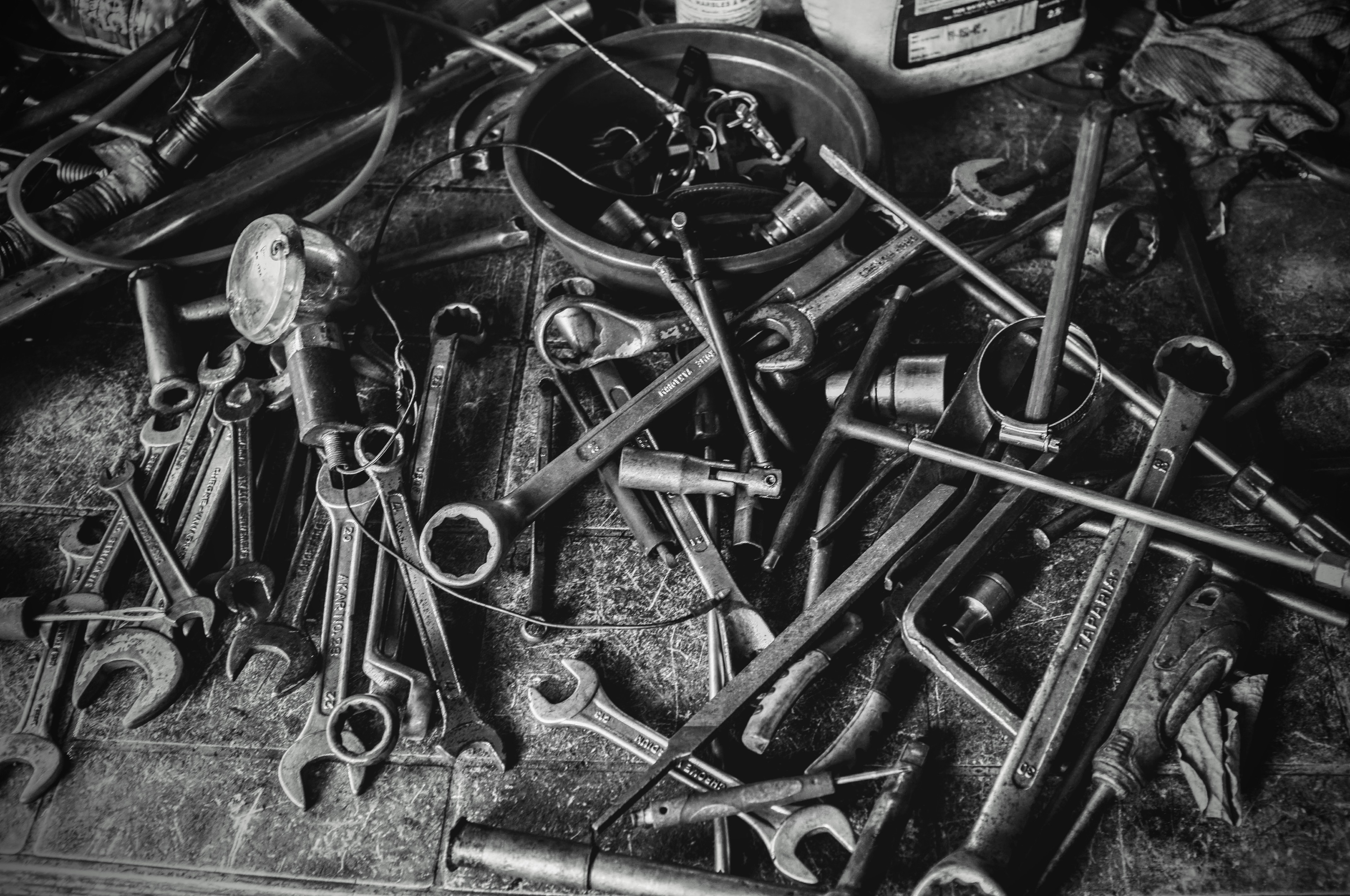
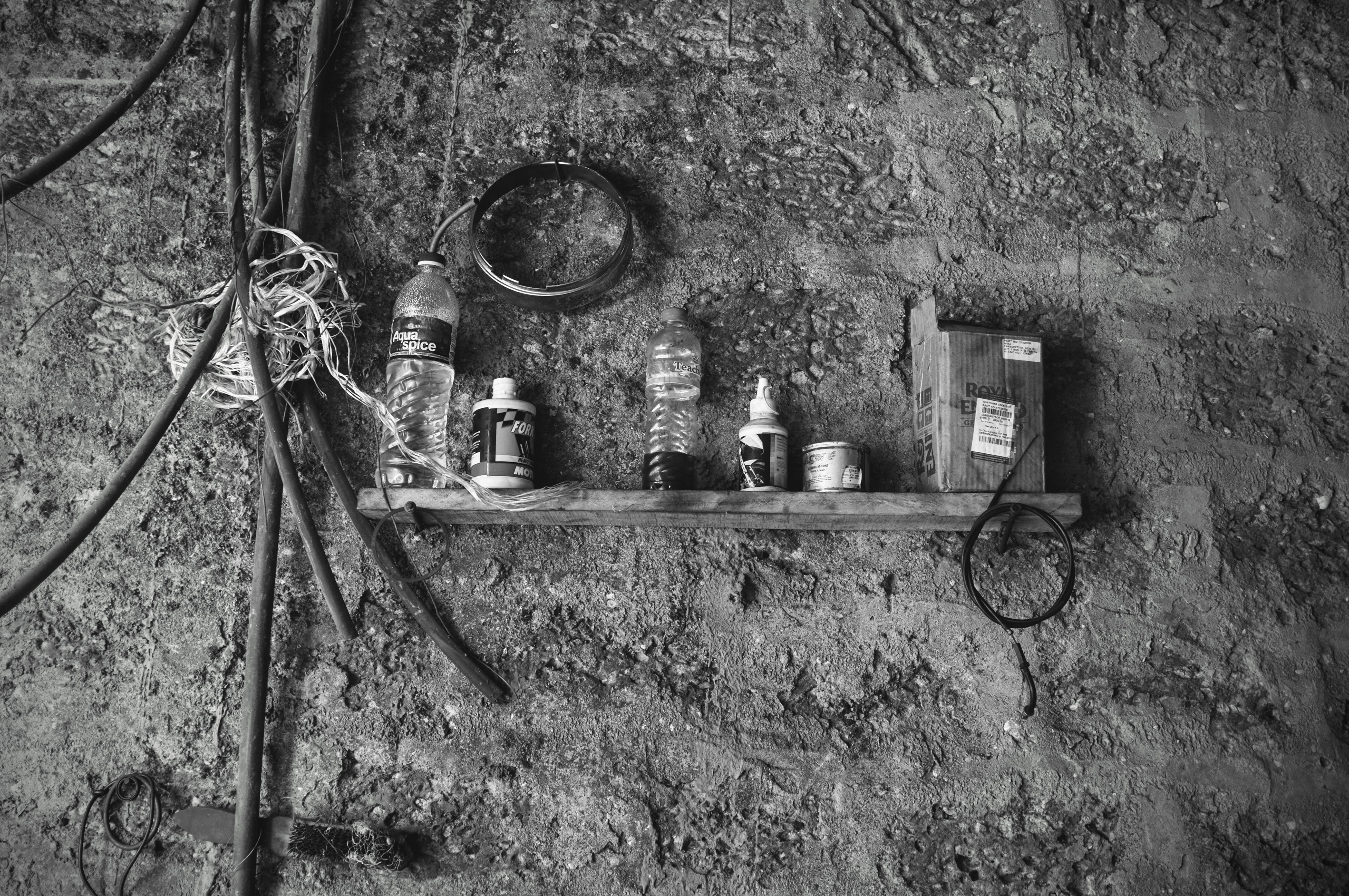
The Daily Rhythm
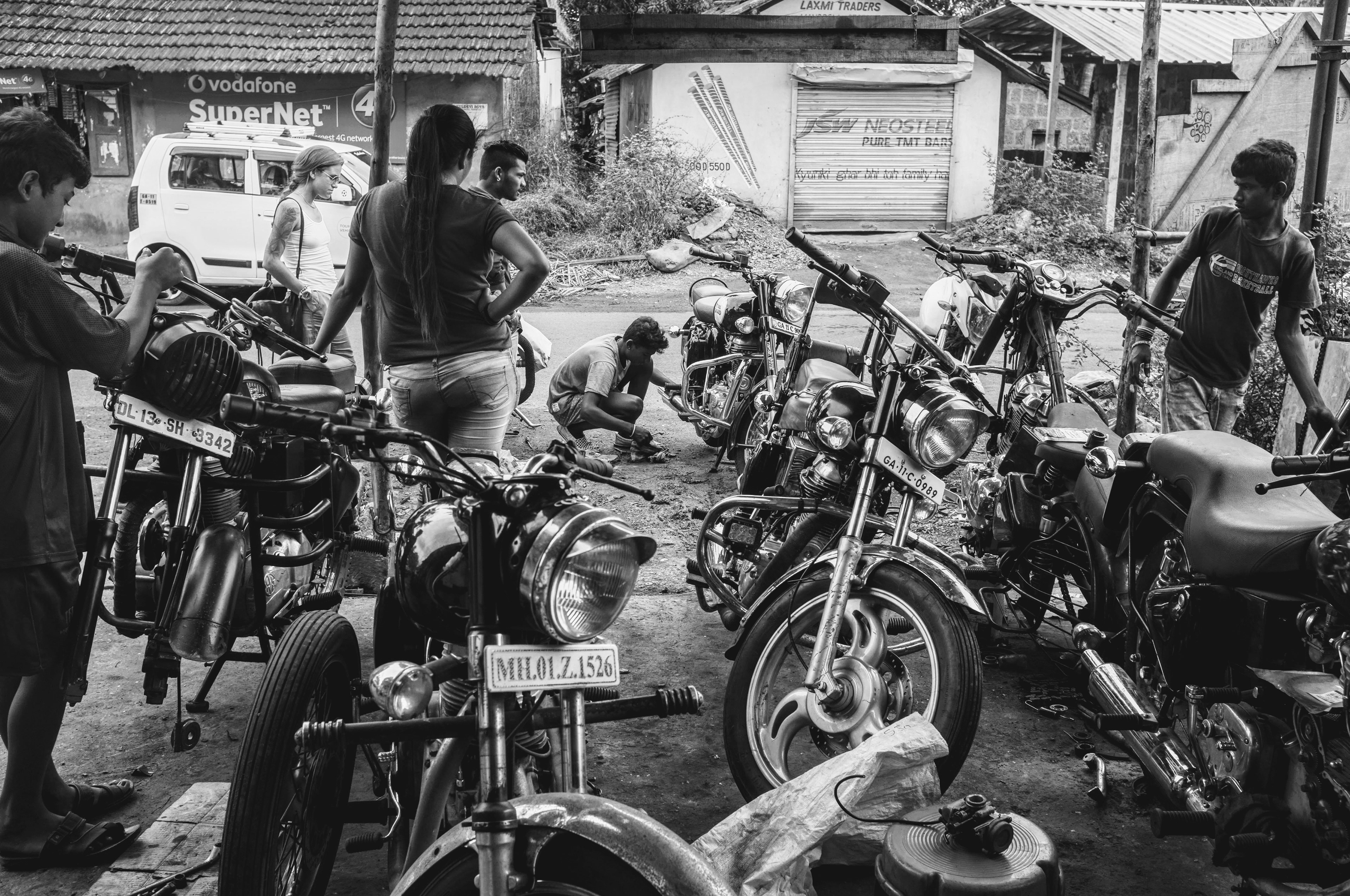
For 15 years Raj has run this shop in Mandrem, 35 kilometers north of Panaji. He spent 5 years in Calengute learning the Enfield's distinctive qualities before moving north to escape the tourist crowds. Now his grease-filled grotto sees a steady supply of Enfields and scooters in various stages of disrepair. At 10 to 12 bikes a day, maintenance work is his naan and ghee. Oil changes, brake adjustments, chain tensioning, carburetor cleaning—the endless small surgeries that keep Goa's two-wheeled population mobile. Customers arrive in waves. Early morning brings locals—fishermen and shopkeepers whose bikes are their lifeline. Mid-morning brings tourists, often sheepish, their rental bikes showing signs of overconfident riding. Late afternoon brings the custom clients, who see in their bikes not just transportation but expression.
"Many Russians come to my shop and want to turn their Enfield into a Ural or Voskhod," Raj explains. "They want something that reminds them of home." The irony isn't lost on him—that these massive Soviet machines and the humble Indian Enfield share some essential quality of mechanical honesty.
Inside the Machine
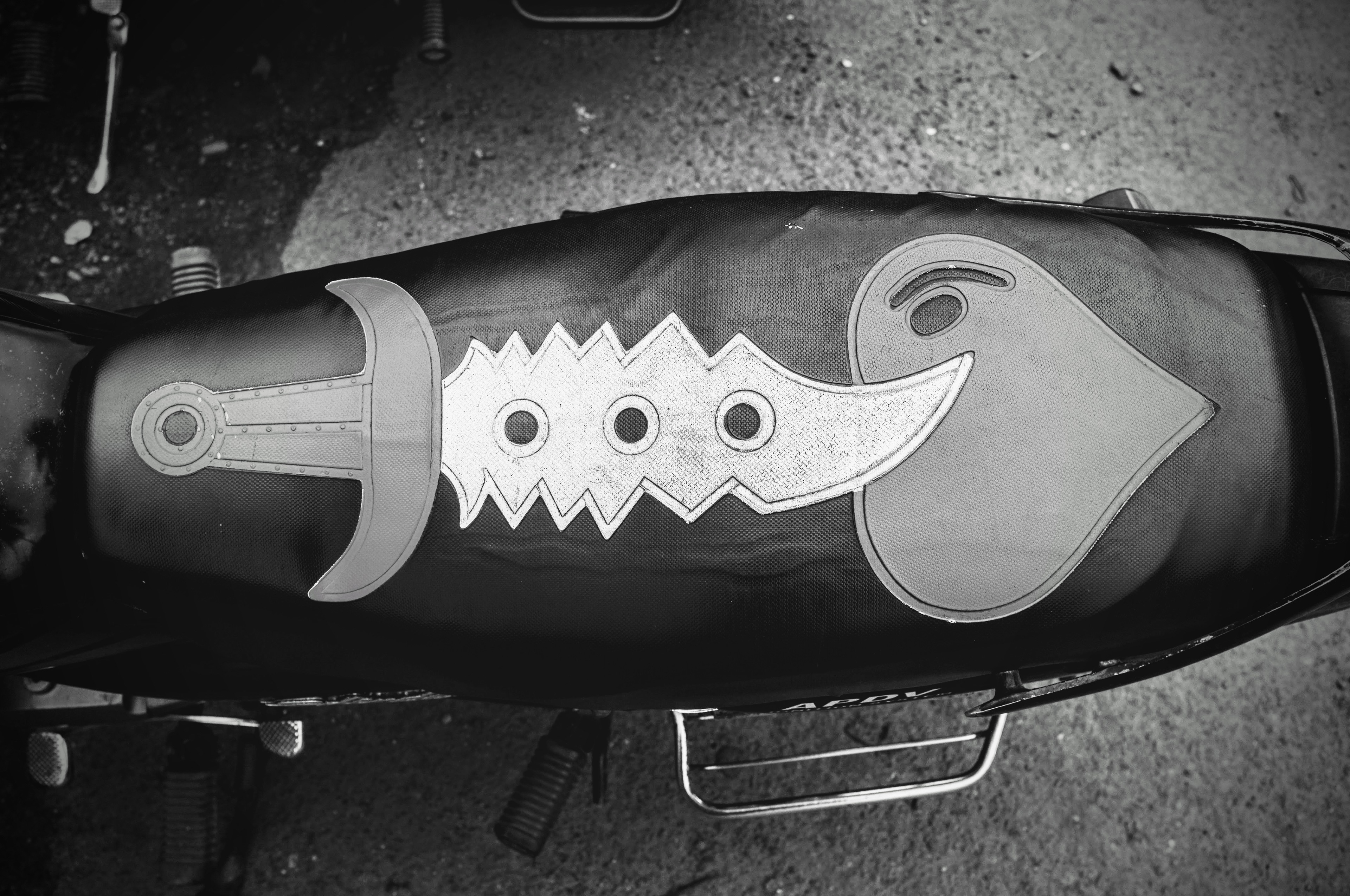
In the back, there's always a customization underway. "With the custom work, I get new ideas. I can learn from them and grow. In a good year, we usually can get through 10 to 15 rebuilds." This is where Raj's philosophy reveals itself. Maintenance pays the bills, but custom builds feed something deeper. "You can't fight the machine," he says, hands moving across a stripped frame. "The Enfield wants to be what it is. You can change things, improve things, but if you try to make it something completely different, it will fight you." This respect for the machine's nature extends to his repair work. He could cut corners customers would never notice. But there's a pride that prevents this. "When a bike leaves my shop, it has to be right. Not just running, but right. The customer might not know the difference, but I know. And the machine knows."
When not in the shop, Raj likes to ride. "Goa is not good," he explains. "There are too many small roads. You got to go farther afield to really ride." The streets of Goa are one part organized complexity, another part stop-and-go calamity where the only agreed upon rule is honking as a way of saving lives. Bands of tuk-tuks growl their 2-stroke chainsaw songs while whizzing past garlands of marigolds hanging from Banyan trees. The whole experience is both exhilarating and exhausting.
But get beyond Goa, out onto the highways ribboning across India's vast interior, and the Enfield reveals its true character. "One of my favorite rides is Leh to Manali and then on... back down to Goa," Raj reflects. High Himalayan passes where the air thins and the engine labors, then swooping descents through pine forests and villages where children run out to watch the bikes pass. "This is where you can really ride. When you get out on the highway you can imagine how the engine works and really start to feel it. When I go for a long ride, I like to get inside the engine. Each vibration and every sound takes me there. You can really feel the power and enjoy the machine." This is the mechanic's mysticism—the ability to disappear into the machine, to feel through the handlebars what's happening inside the engine block. It's the deep knowledge that comes from thousands of hours with your hands on metal, learning to read the language machines speak.
The Enfield's vibration, which would be considered a flaw in a modern bike, becomes feedback. Communication. The machine telling you what it's doing. That distinctive "puttah-puttah-puttah" that first caught Raj's attention as a five-year-old carries information for those who know how to listen. A slight change in rhythm means a valve needs adjustment. A new rattle means something has come loose. "You work on these bikes long enough," Raj says, "and you start to understand that they're not just mechanical. They have personality. Each one is different. Some are stubborn. Some are generous. Some need constant attention. Some just want to run and run and run." He pauses, considering whether this sounds foolish, then shrugs. "People think I'm crazy when I say this. But anyone who really works with machines knows it's true."
Raj pauses and slowly smiles. "The Enfield is gold."
The Pattern
As afternoon light angles through the garage doors, turning dust motes into constellations, Raj wipes his hands on a rag that was probably once a different color. Around him, his crew—young men learning the trade—work with the focused intensity that comes from knowing there's always another bike waiting.
The garage is more than a business. It's a node in a vast network of mechanical knowledge, one of thousands of points where the practical work of keeping India moving happens every day. A place where the object of labor is still comprehensible, where cause and effect are visible, where the fruits of your work are immediate and tangible. You fix a bike, and that afternoon someone rides it away. The connection between effort and outcome is direct in a way that's vanished from much of modern work. And always, underneath everything, there's that sound. The puttah-puttah-puttah that drew a five-year-old boy to this life, that still brings him to the shop every morning, that reverberates through the coastal air of Goa like a heartbeat, like a promise, like a question the engine asks over and over: Are you listening? Do you understand? Can you help me run?
The answer, from Raj and his crew, day after day, bike after bike, is always yes.
And the puttah-puttah goes on.